
Ridgecrest Neighbors by Block Source
A Ridgecrest neighbors search works by layer. Kern GIS shows nearby parcels and APNs. The assessor can describe a parcel but does not display the owner name online. Recorded deeds can name owners at a transaction date. City permits can show work and named applicants. Voter information is limited to permitted purposes. Community groups may publish officers or business contacts, but no verified citywide neighborhood-member roster was located.
| Source | What It Shows About a Block | Access |
|---|---|---|
| Kern Public GIS | Adjacent parcels, APNs, boundaries, spatial relationships | Free map browse and identify |
| Kern Assessor search | Situs, APN, values, map link; no owner online | Free one-parcel search |
| Recorded plats and deeds | Subdivision context and named transaction parties | Recorder index or counter |
| Permits and code files | Work, date, site, applicant, contractor, owner fields | City request by address or APN |
| Voter file | Nearby registered voters only for a statutory purpose | Restricted, not casual browse |
| Community organizations | Voluntary public officers or business contacts | Organization pages; no private roster entitlement |
Owners, occupants, voters, subscribers, and members are different populations. A mailing address may differ from the situs. A deed may be old. A permit applicant may be a contractor. A civic page may name an officer without naming members. These limits are why neighbors should be described as nearby parcels and public sources, not as an inferred household list.
Use Ridgecrest GIS to Walk a Block
The adjacent-parcel method starts with a known address. Search it in the Kern Public GIS viewer, zoom until parcel lines show, identify the target shape, and then click every parcel sharing a boundary and those across the street. Record the APN and situs shown by the source. Do not guess a house number from a visual map.
- Locate the address and save the map view or parcel link.
- Turn on parcels, assessor books, tax areas, streets, and other useful layers.
- Identify the target parcel, then click adjoining and across-street shapes one by one.
- Carry each APN to assessor, deed, permit, or plat research as a separate row.
- Use the measure tool only for distance or area context; there is no verified one-click neighbor report.
GIS is informational and can contain incomplete ancillary data. Hardcopy assessor maps remain official. For the full named-street chain, move to the Ridgecrest street directory instead of widening the block search.
Map Ridgecrest Parcels, Then Owners
GIS can show where land touches. It does not solve the owner field. Kern’s assessor website suppresses owner names, and the GIS web display remains subject to the same privacy rule. Take each APN to the assessment-roll counter or a recorder grantor-grantee search where a lawful name request is available. Keep each parcel separate.
Do not infer owner-occupancy from a mailing address. A mailing address can be different for innocent reasons. A deed records a transaction, not a current block presence. A permit names an applicant or contractor only if the file contains it. The block method is a way to organize sources, not a shortcut to a household conclusion.
Ridgecrest Has No Verified Neighborhood Roster
Ridgecrest’s public civic structure is citywide boards, commissions, committees, and meeting records. Research did not locate a verified city umbrella page with neighborhood-association member directories. Private HOAs may appear in SOS filings or subdivision deeds, but membership rosters are private unless an organization chooses to publish them.
Useful public substitutes include council districts, precinct resources, subdivision maps, the Chamber’s business directory, museum and library programs, and voluntary public officer contacts from veterans or fraternal groups. A congregation or club contact should not be converted into a resident list.
City boards and meeting packets can show public roles in Ridgecrest, not everyone who lives near a parcel.
Ridgecrest Block Voter Data Is Restricted
California Elections Code §2194 limits voter-registration information to specified election, scholarly, journalistic, political, or governmental purposes. Driver-license numbers, Social Security numbers, signatures, and restricted birth details stay confidential. A casual block browse is not a lawful use of the voter file.
My Voter Status is for the voter’s own verification and asks for identity credentials. Safe at Home participants can receive confidential voter registration and a substitute address. An inactive record can result from maintenance processes and is not proof that someone left a parcel.
Kern Elections can explain a permitted-purpose request, but its current form, cost, and delivery format were not published. Treat the voter layer as restricted and incomplete.
Use Public Ridgecrest Civic Contacts
Community research is strongest when it follows a voluntary public role. City boards and commissions identify officials and meeting activity. The Ridgecrest Chamber can identify businesses and public business contacts. Maturango Museum, China Lake Museum, Beale Library, veterans groups, and fraternal organizations may preserve historical programs or public officers. Ask whether an archive accepts a name or address question; do not request a private member list.
| City boards and commissions | Public roles, terms, agendas, and meeting records. |
|---|---|
| Chamber directory | Businesses and public business contacts, not general residents. |
| Museums and library | Community history, photographs, publications, and research referrals. |
| Voluntary organizations | Officers or historical rosters when the organization chooses to publish them. |
Official Rolls Versus Neighbor Tools
Official sources identify a custodian and a record purpose. Commercial neighbor tools may blend public records and purchased data, repeat stale addresses, or merge namesakes. They can supply a lead, but a parcel, deed, permit, court file, or library entry must be checked at the office that holds it.
| Source type | Strength | Limit |
|---|---|---|
| Kern GIS and Assessor | Parcel location, APN, map, values | No complete neighbor list; owner name suppressed online |
| Recorder and city files | Dated title, permit, easement, or work evidence | Names may be historical or role-specific |
| Commercial compilation | Possible spelling or address lead | Source, date, and accuracy need independent checking |
Use Ridgecrest Permits to Read Change
A block’s permits can show when a repair, addition, inspection, or site change occurred. Request by address or APN and date range through the city department or CPRA form. The record may include a work description, applicant, contractor, owner field, and inspection activity. It does not prove who lives there.
Ridgecrest’s public-records form asks for contact details, a narrative, and mail or pickup choice. The city ordinarily gives a determination within ten days, with a possible fourteen-day extension. A focused block request is more useful than a broad demand for every nearby file.
California Attorney General CPRA guidance describes the request process and inspection principle.
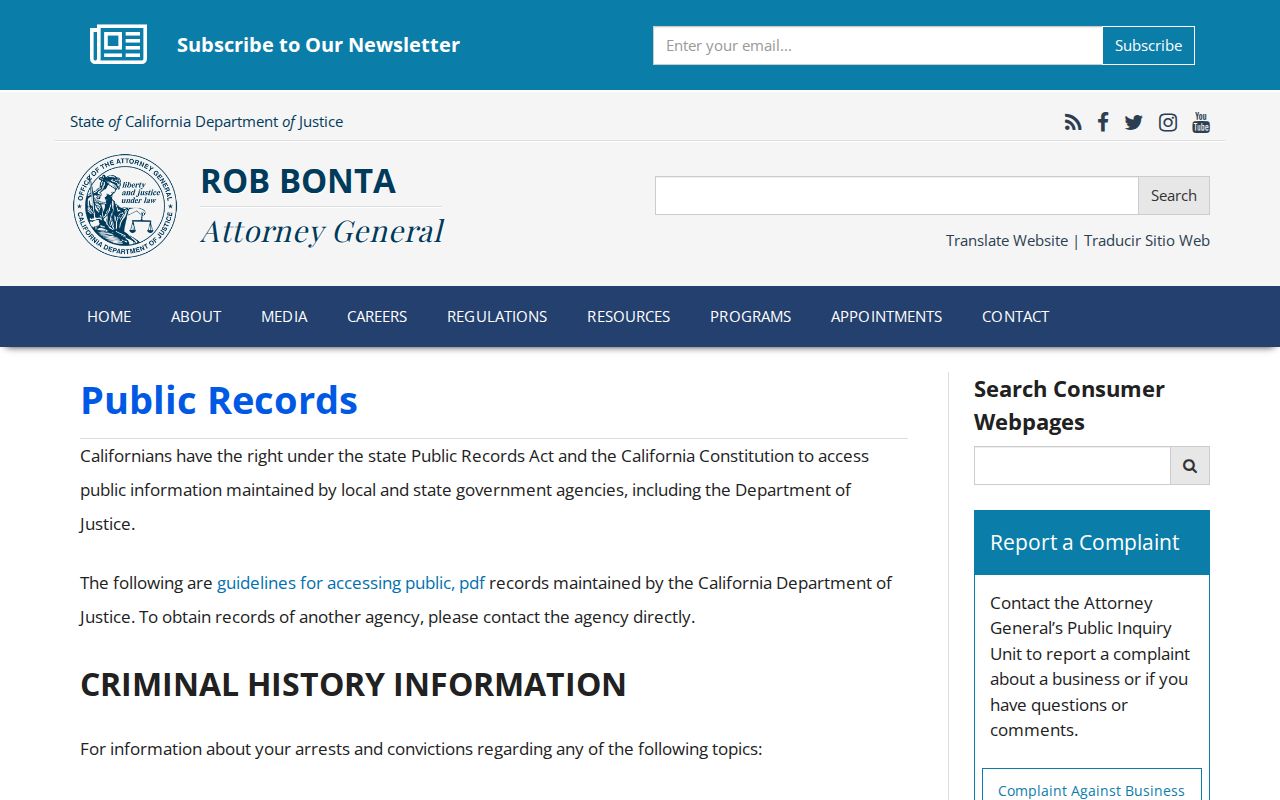
The CPRA guidance image connects a block question to the correct records-request channel.
Know the Copy and Access Boundary
A block search may end with a copy request rather than a screen result. Certified vital copies, court files, deeds, and city records each have their own custodian, eligibility rule, and fee. A certified copy is an official reproduction of a record, not a broader person report. The requester should state the event, address, parcel, date range, or case number that makes the request identifiable.
CDPH direct vital-copy processing averages four to six weeks in the July 2026 update, while county offices may be faster. A birth or death copy is about an event, and a deed copy is about a recorded instrument. Neither is a general neighbor list.
CDPH’s certified-copy guidance shows the direct-ordering boundary.
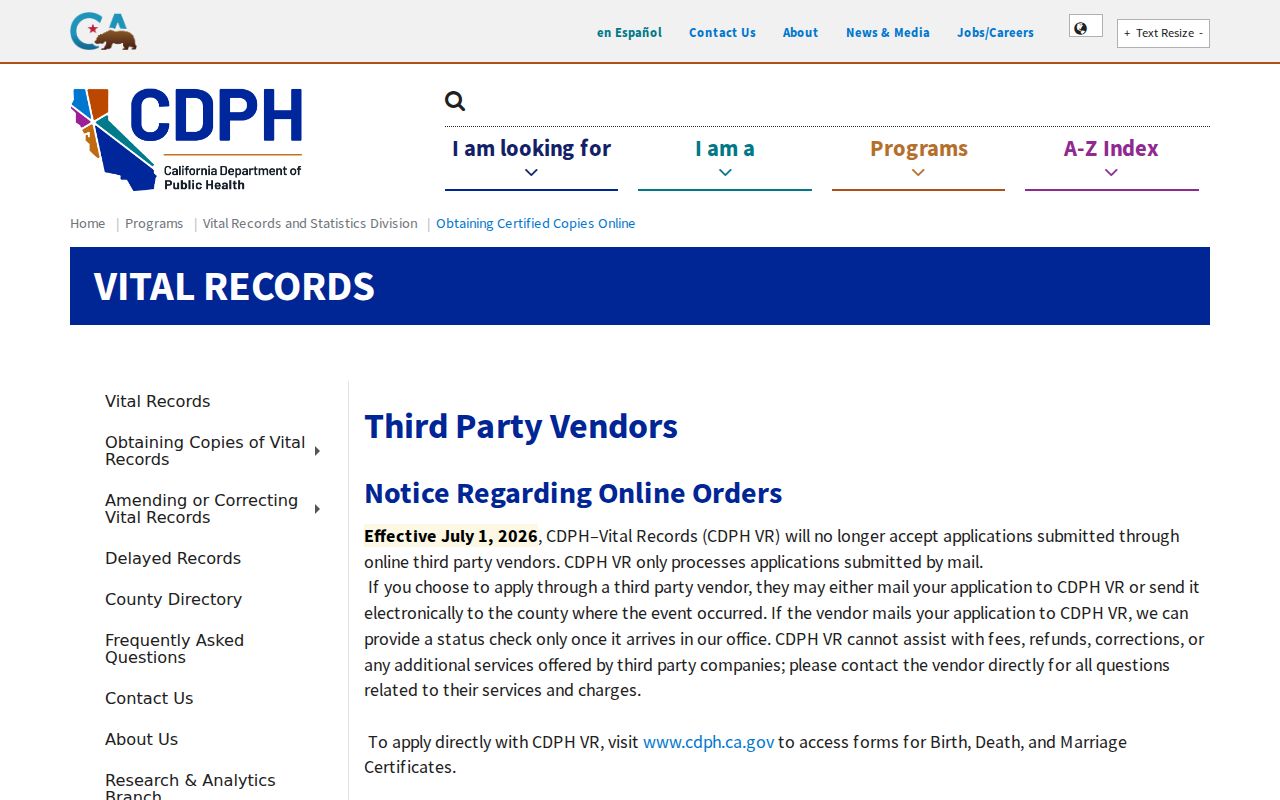
The certified-copy screen illustrates the difference between obtaining one official event record and assembling a block clue.
Privacy Limits on Ridgecrest Neighbors
Neighbors cannot be identified from every service record. Household members, utility customers, delivery data, and DMV addresses are not an open block directory. Safe at Home can replace a qualifying participant’s address with a substitute mailing address and confidential voter record. Old public records may remain, so a protected person’s absence or substitute address should not be reverse-engineered.
California Penal Code §646.9 addresses stalking, and Code of Civil Procedure §527.6 provides a civil-harassment restraining-order process. Public availability never authorizes repeated unwanted contact, intimidation, impersonation, or tracking.
Lawful use. Ridgecrest neighbors research supports getting to know a block, reconnecting, family history, civic questions, and personal safety awareness. Do not use it to watch, harass, intimidate, or harm anyone.
Protected Addresses Change Neighbor Results
Safe at Home, established in Government Code §§6205 through 6211, serves qualifying victims through a substitute mailing address, confidential voter registration, confidential name change, and DMV suppression. Government agencies and courts accept the substitute address in specified settings, including real-property documents on participant request. The program does not automatically erase older public records.
Search notes should record that a substitute address may be deliberate. Never use a parcel gap, old deed, or map to try to uncover a protected location. The correct response to an address concern is the official program and the custodian, not a wider search.
California Safe at Home guidance explains the substitute-address effect.
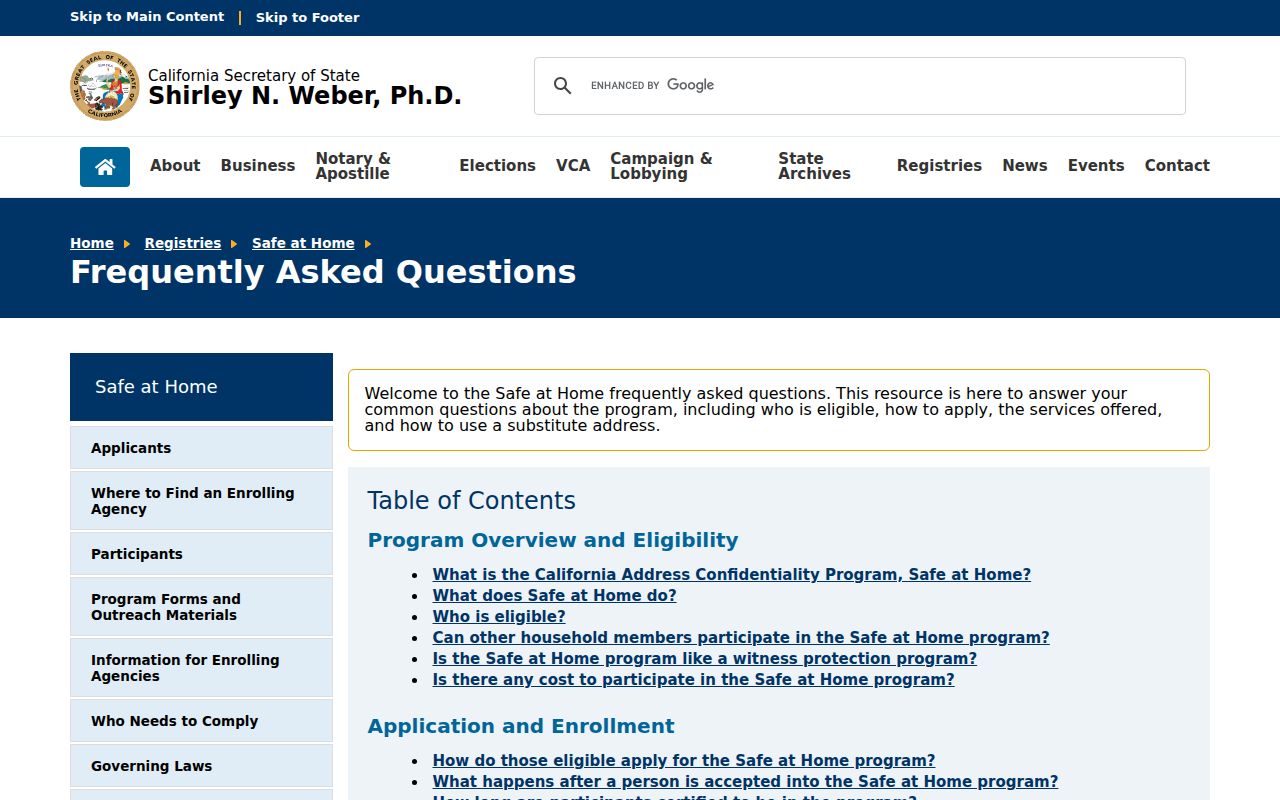
The Safe at Home resource shows why a block-level result can be intentionally incomplete.
Verify Every Ridgecrest Block Inference
Before making a statement about neighbors, write the address, APN, map date, source type, and custodian. Check whether the name is an owner, grantor, grantee, permit applicant, contractor, voter, subscriber, public officer, or historical household member. Compare a second dated record when the conclusion affects a living person.
For a whole named street, use the street directory workflow. For one person, use the resident lookup trail. For a former occupant, use the previous-residents method. The block page should stay focused on adjacent parcels and voluntary community contacts.
A careful Ridgecrest neighbors result ends with what the source shows and what it does not, rather than a guessed household label.